Default values assume the worst about you.
Your carbon number exists whether or not you measure it. The only question is who calculates it, and whether they have any reason to be generous.
Current as of September 2026. CBAM rules are changing quickly; check the position before acting on anything here.
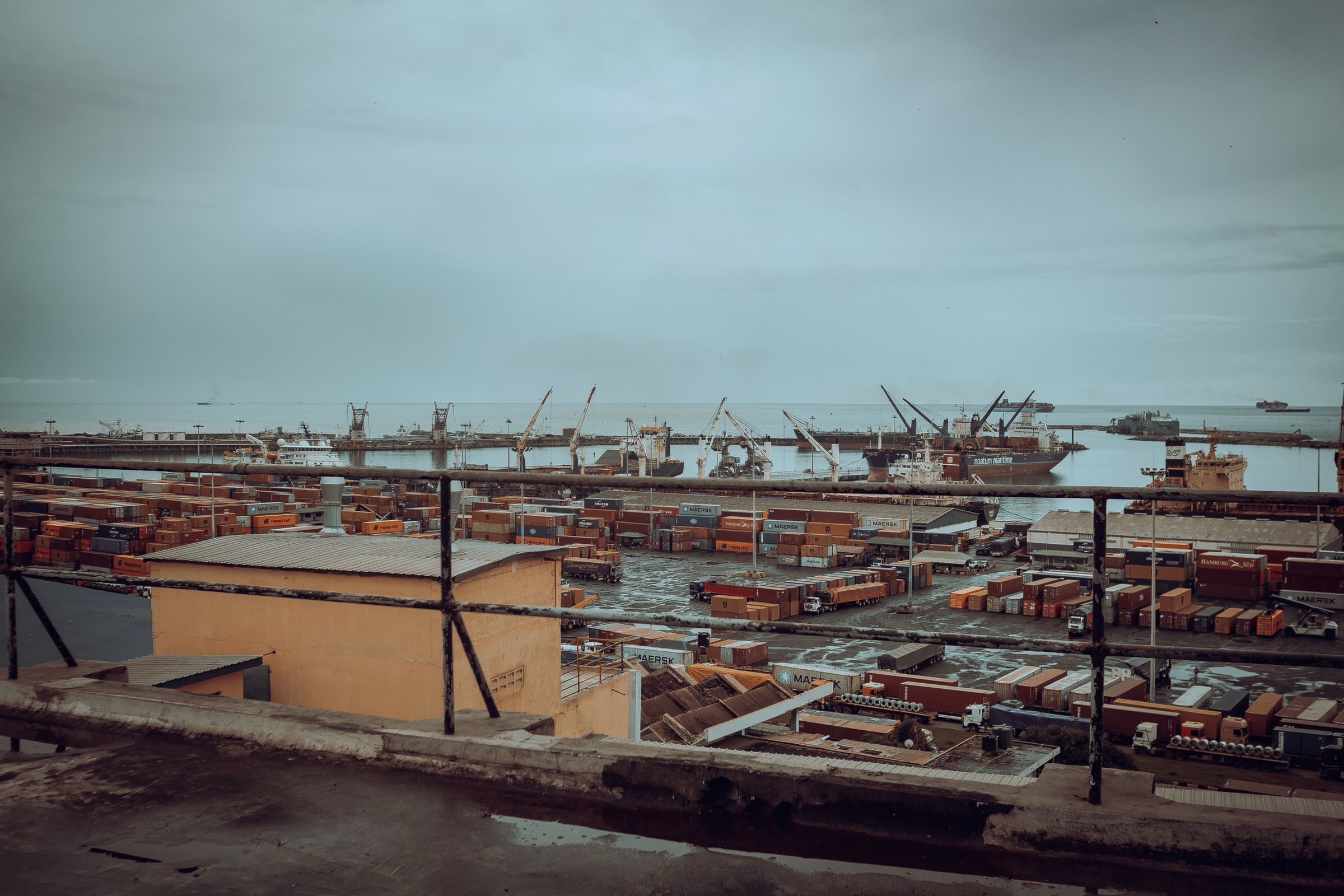
Place a photograph atassets/photo-port.jpg
Every consignment stacked here now carries a carbon number to the European border. The only question is whether it is yours or a default.
What changed
The EU's Carbon Border Adjustment Mechanism left its reporting-only phase on 1 January 2026. Importers of covered goods must now be authorised CBAM declarants, and the emissions embedded in what they buy carry a certificate cost.
The money moves later than people assume. There are no certificate purchases during 2026 itself: the first annual declaration and certificate surrender falls due on 30 September 2027, covering 2026 imports. The liability is accruing now and will be settled then.
Which means your buyer already has a financial reason to prefer suppliers who can produce verified numbers, and a year in which to change supplier before the bill arrives.
Why it costs you
Where actual emissions data is not available, default values apply. Defaults are set conservatively, which is a polite way of saying they assume a dirty process. For many African producers the default is well above what they actually emit.
You pay the difference, through a lower price or a lost order, for emissions you never produced.
Avoiding that means using actual emissions data, and actual data has to be verified by an accredited third party — including an on-site audit in the first year and assessment against a 5% variance threshold. A figure you cannot substantiate to that standard is, in practice, a default value.
Ghana should be winning this
A relatively clean grid is a genuine competitive advantage under a carbon border tax. It only counts if you can prove it.
The advantage is real
Cement, iron and steel, aluminium, fertilisers, electricity and hydrogen are the covered goods today. Producers on a lower-carbon grid have a structurally better number than competitors on coal-heavy systems. That is worth money at the border — to whoever can document it.
The scope is widening. A proposal to extend CBAM to steel and aluminium-intensive downstream products from 2028 is working through the EU legislature, and both the Council and Parliament have pushed for a broader list than the Commission first proposed. If you make finished or semi-finished metal goods, assume you are in scope eventually.
The data burden is unprecedented
Reporting is required at installation level and by CN code, not company average. Most producers have never tracked energy or process emissions at that granularity, and no spreadsheet survives that requirement for long.
Small shipments fall outside it
A de minimis threshold of 50 tonnes applies, aggregated across all covered goods per importer per calendar year. Below that, no CBAM obligation arises. It is worth knowing where your customers sit relative to that line before assuming the rules bite.
The cost ramps rather than lands
The financial effect phases in gradually, mirroring the phase-out of free allowances under the EU Emissions Trading System, and reaches full weight in 2034. For 2026 imports the certificate price tracks the quarterly average EU allowance price; from 2027 it tracks the weekly average. So the gap between a verified number and a default widens every year.
Your buyer will ask before your regulator does
The pressure arrives commercially, in a procurement questionnaire, months before anything arrives from a government. By then the supplier who prepared early has already been shortlisted.